
.jpg?w=2740&h=1535)
If you’ve ever hosted a dinner party in a small apartment or tried to fit a growing family around a too-small table, you already know how important the right dining table can be. The dining area is more than just a place to eat—it’s where life happens: meals, homework, late-night talks, even impromptu work sessions. But when it comes to choosing the perfect centerpiece, one big question arises: Should you go for an expandable dining table or a non-expandable one?
Both have their advantages, but one is likely to fit your lifestyle better than the other. Let’s break it down.
1.Space and Flexibility
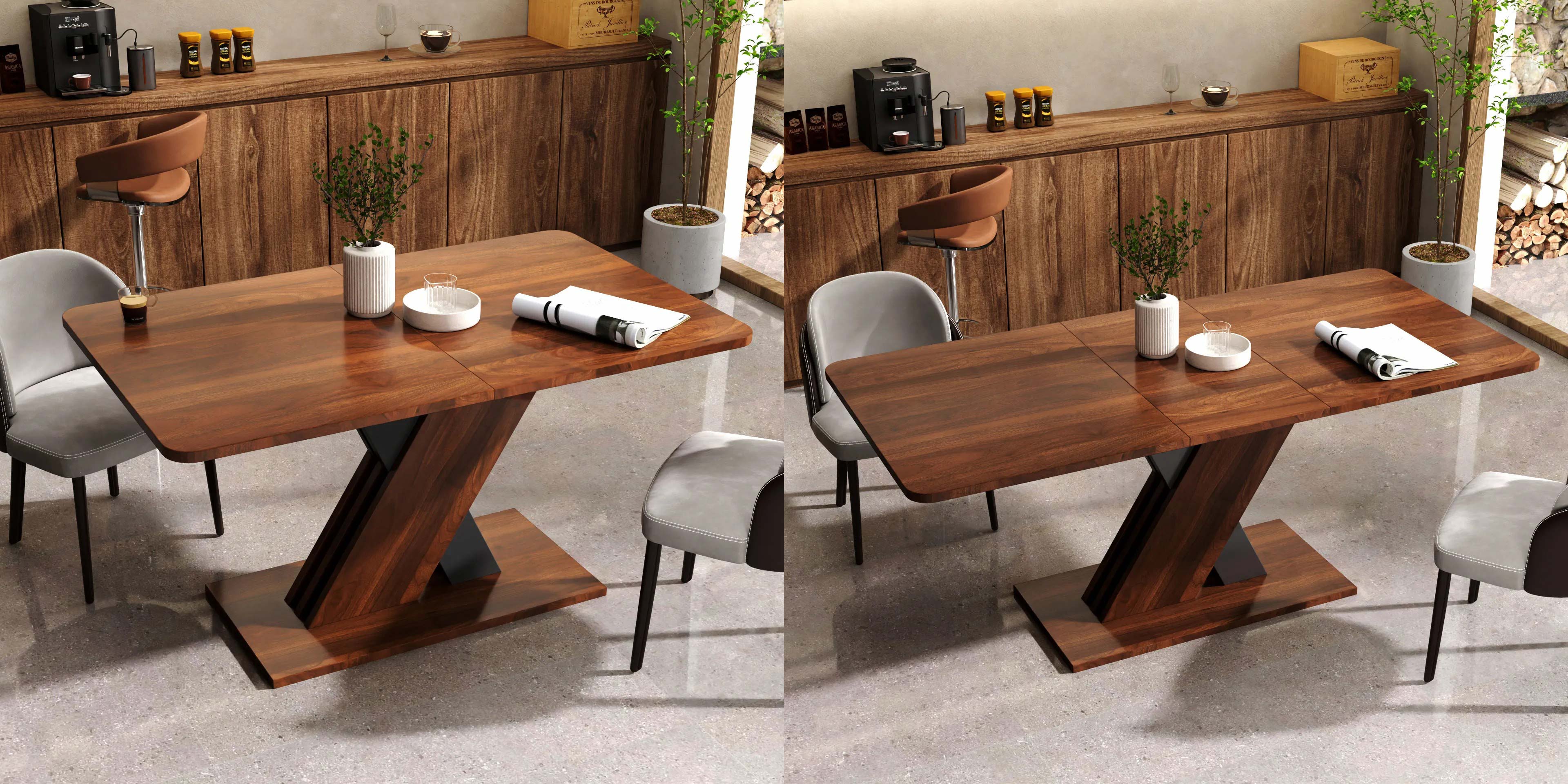
One of the biggest advantages of an extendable dining table is flexibility. If you live in a smaller home or apartment, you don’t want a large, bulky table taking up space every day. A space-saving dining table can stay compact for daily meals and easily expand when guests arrive.
For example, the Joysource Extendable Dining Table lets you seat four comfortably for weekday dinners and stretch it out for six when friends drop by. It’s the definition of functional minimalism—neat, smart, and ready when you need it.
A non-expandable table, on the other hand, is fixed in size. That’s fine if you have a spacious dining room or rarely host large gatherings, but it can be a daily nuisance in tight spaces. You might find yourself constantly working around it, instead of it working for you.
Winner: Expandable dining table—it adapts to your life, not the other way around.
2.Style and Aesthetic Impact
There’s a misconception that expandable tables look too “mechanical.” Today’s designs prove otherwise. Modern options like the Joysource extendable dining table blend elegant finishes with hidden extension mechanisms. The result? A table that looks like a design statement, whether it’s open or closed.
With Joysource Furniture, craftsmanship and detail are key. The finish gives off warmth and sophistication, while the extendable feature is seamlessly built into the design. You wouldn’t even know it’s expandable until you slide it open.
Non-expandable tables can be beautifully simple too, offering clean lines and a steady focal point in your dining area. But they’re less adaptable when your décor or needs evolve. The modern home calls for flexibility—and that includes your furniture.
Winner: Expandable tables, for balancing design and practicality.
3.Functionality and Everyday Use
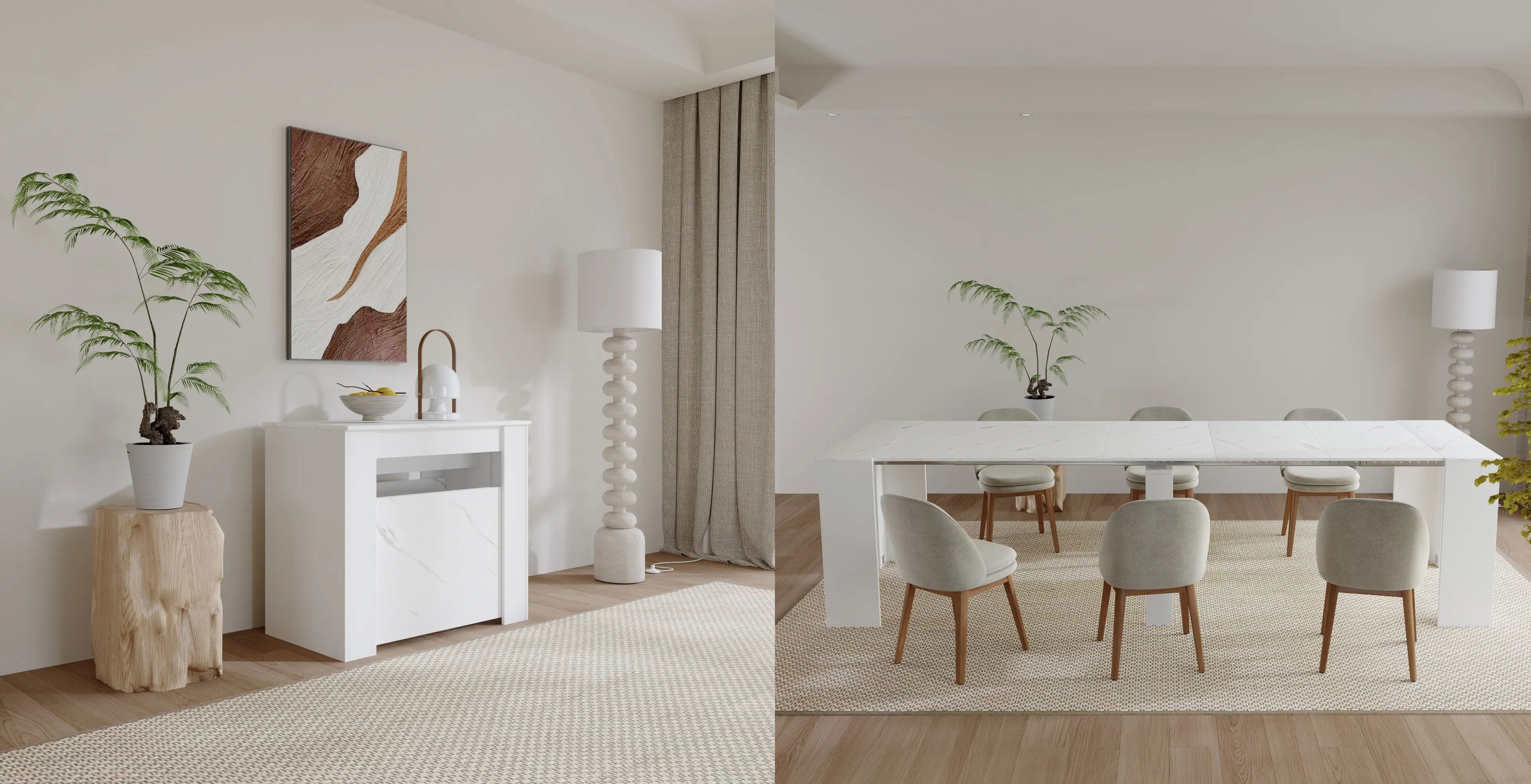
Think about how you actually use your dining table. Do you eat all your meals there, or is it more of a workspace during the day? An extendable dining room table allows for multiple roles: compact during solo meals or work sessions, then expanded for shared dinners.
Some models, like the Joysource Expandable Dining Table with Hidden Storage, go beyond basic function. It features shelves along the sides and a clever spot to store its extension leaves—so you’re not juggling panels or hunting for parts when you want to expand it. It’s a thoughtful design at its best.
By contrast, non-expandable tables are straightforward—what you see is what you get. They’re easier to maintain, with no parts to move or mechanisms to adjust, but they lack versatility.
Winner: Expandable tables, especially models with built-in storage or multi-use surfaces.
4.Durability and Maintenance
Here’s where non-expandable tables often shine. Fewer moving parts mean fewer potential maintenance issues. The construction is usually solid throughout, with no hinges, slides, or hidden panels to worry about.
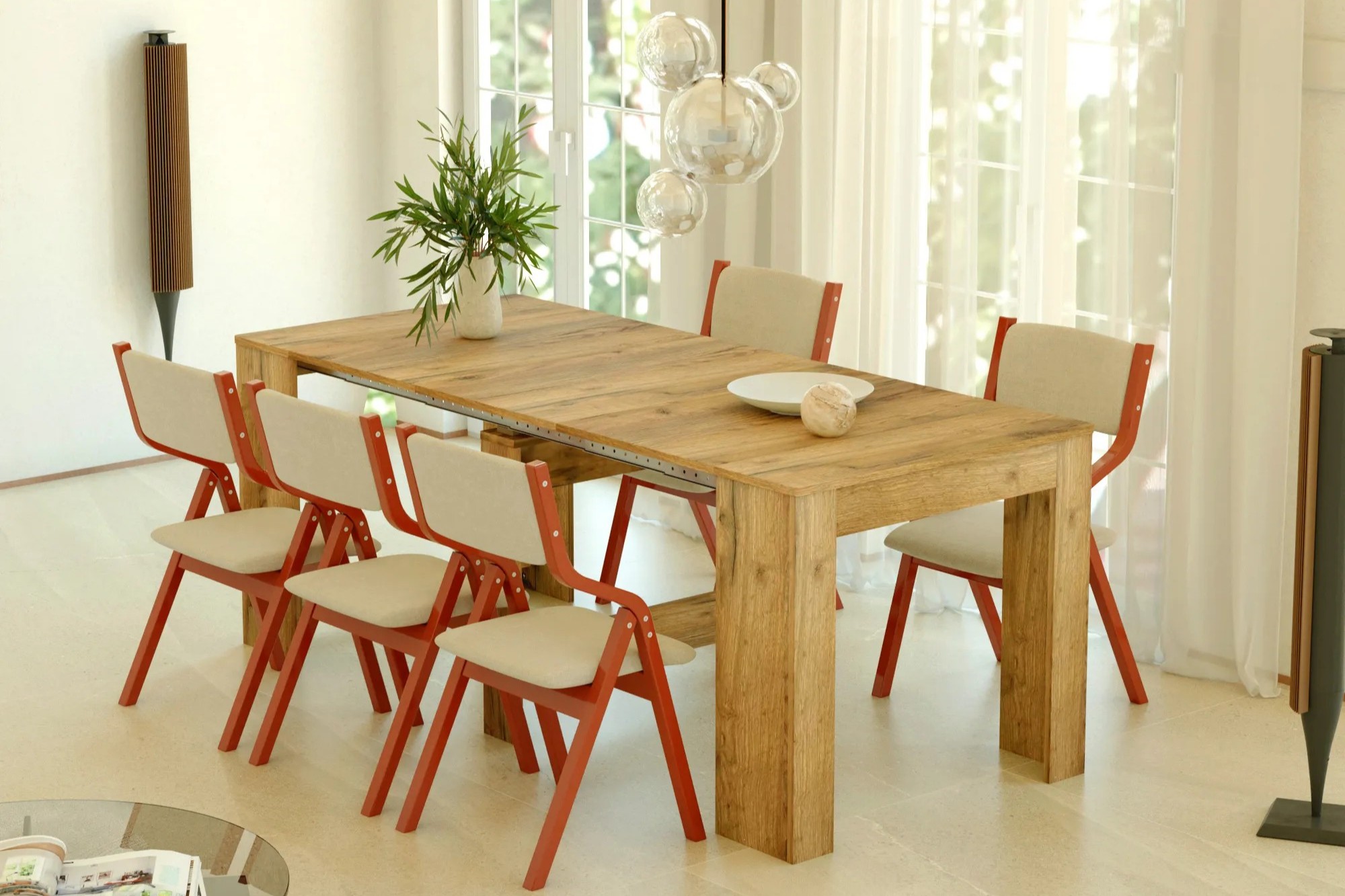
However, the best extendable dining tables are built with sturdy materials and smooth, durable mechanisms. High-quality metal runners and precision joints mean the extensions glide easily and hold firm when locked. With proper care, they’re just as long-lasting as fixed tables.
Winner: Tie—go for quality, whichever type you choose.
5.Versatility Beyond the Dining Room
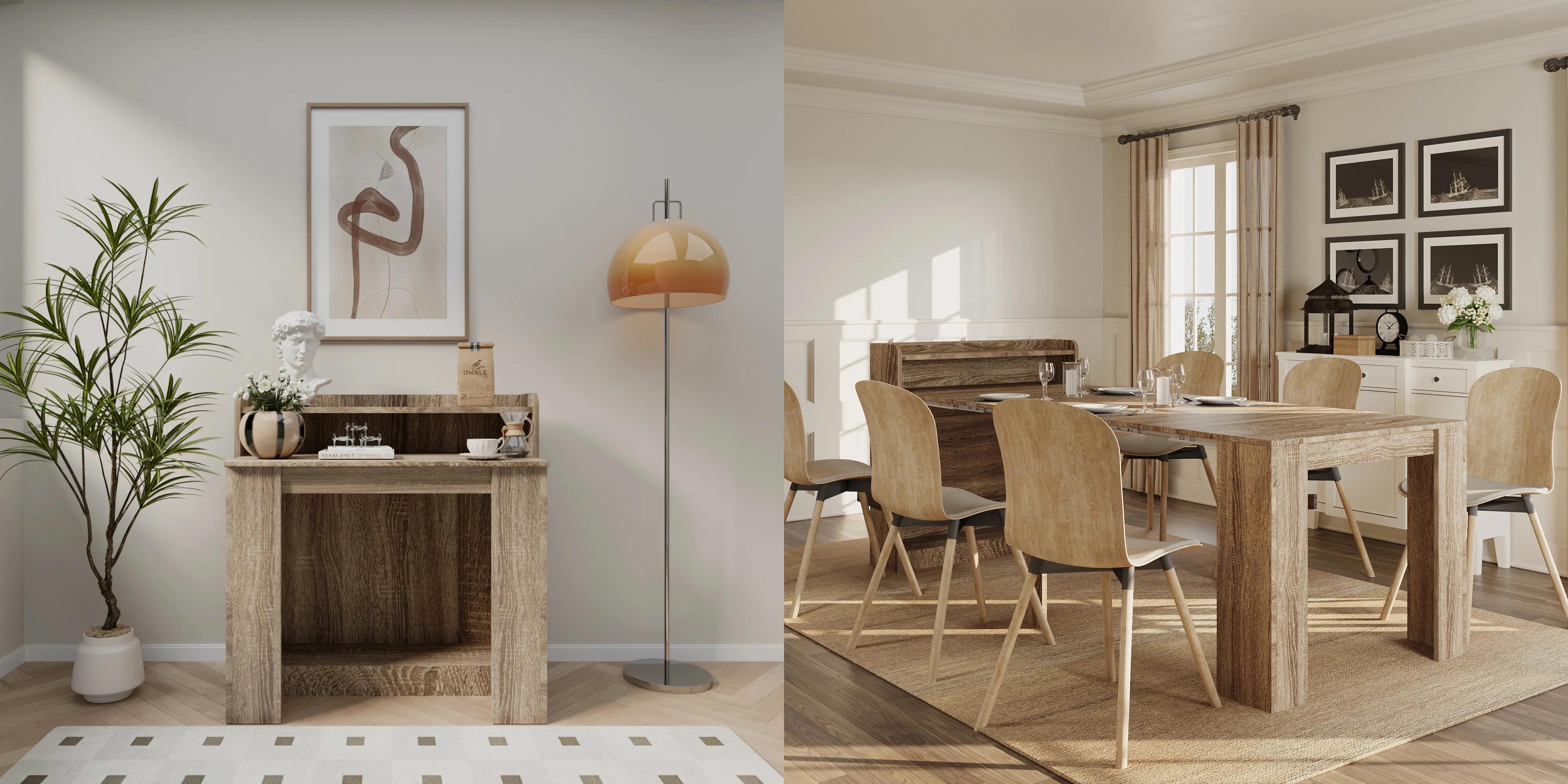
One of the coolest features of some modern expandable tables is that they’re not limited to the dining area. The extendable console table is a perfect example. Closed, it works as a hallway table or desk. Extended, it becomes a full dining surface for four or more people.
The Joysource Space Saving Extendable Console Table is a brilliant demonstration of this flexibility. It starts off compact and sleek—perfect against a wall—and expands into a dining setup for six to eight guests. It’s ideal for anyone who wants furniture that earns its space.
Non-expandable tables usually have one job: to serve as a permanent dining surface. That’s fine if you have room, but for people who value adaptability, extendable designs win hands down.
Winner: Expandable tables, especially console styles.
6.Cost and Value
It’s true that an extendable dining table usually costs more upfront. The added mechanisms and engineering contribute to the price. However, when you think long-term, you might save money by investing in one piece that serves multiple purposes instead of buying separate tables for work, guests, and daily dining.
A non-expandable table may be cheaper initially, but if your needs change, you might have to upgrade sooner than you’d like. Extendable models grow with you—whether that means more family members, a move to a new home, or simply more dinner guests.
Winner: Expandable tables—better long-term value and flexibility.
The Verdict: Adaptability Is the New Luxury
At the end of the day, the best choice depends on your lifestyle. If you live in a small apartment, entertain often, or just appreciate flexible design, an extendable dining table is worth every penny. It adapts effortlessly from daily meals to holiday feasts, proving that function and beauty can coexist.
If you prefer something ultra-solid, low-maintenance, and permanent, a non-expandable table might suit your space better—but you’ll give up the adaptability that modern living increasingly demands.
For most homes today, adaptability is the real luxury. And in that sense, the extendable table wins—not just as furniture, but as a mindset: less clutter, more possibilities.