
.jpeg?w=2667&h=2000)
Dining tables are the centerpiece of a home, setting the stage for meals, conversations, and gatherings. Yet one of the most common challenges is space: a table that feels roomy for dinner parties often overwhelms the dining area during everyday use. That’s where the extendable dining table comes in.
At the heart of every extendable table lies the extension system, often referred to as the “leaf.” Table leaves come in several types, each with its own mechanism, advantages, and compromises. Understanding these differences is essential when choosing the perfect space-saving dining table for your lifestyle.
Drop-In Leaf
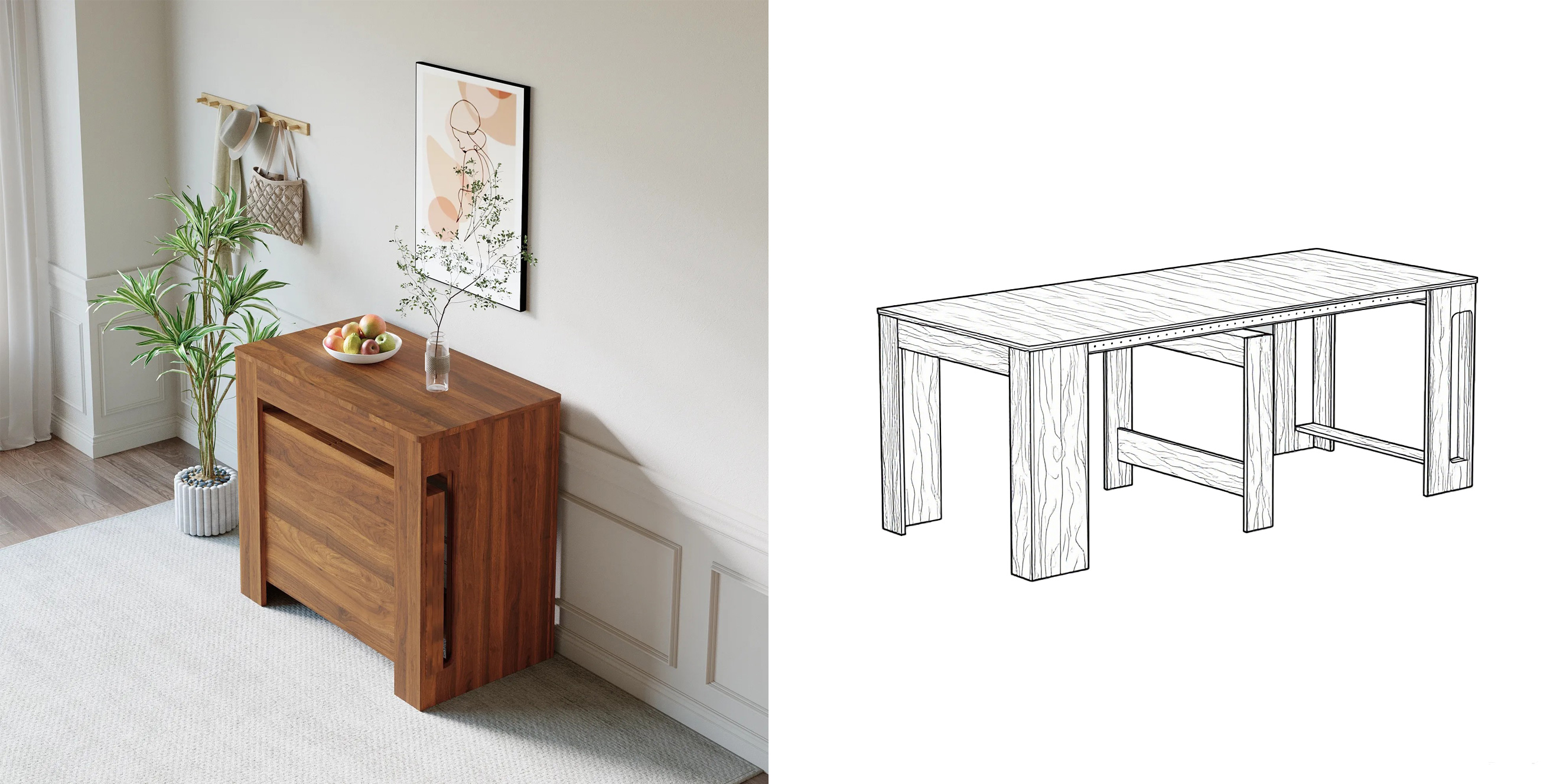
One of the longest-running and most classical designs, the drop-in leaf involves sectioning the tabletop in half and installing a separate panel to increase the space. Once installed, the table locks together to create a solid and smooth dining space. There are many families who like that a drop-in leaf can accommodate many panels, so the table can increase in size to accommodate anything from intimate family dinner parties to large holiday gatherings.
But the downside is storage. Individual leaves will mean that you'll want to have a dedicated space to store the leaves when not in use.
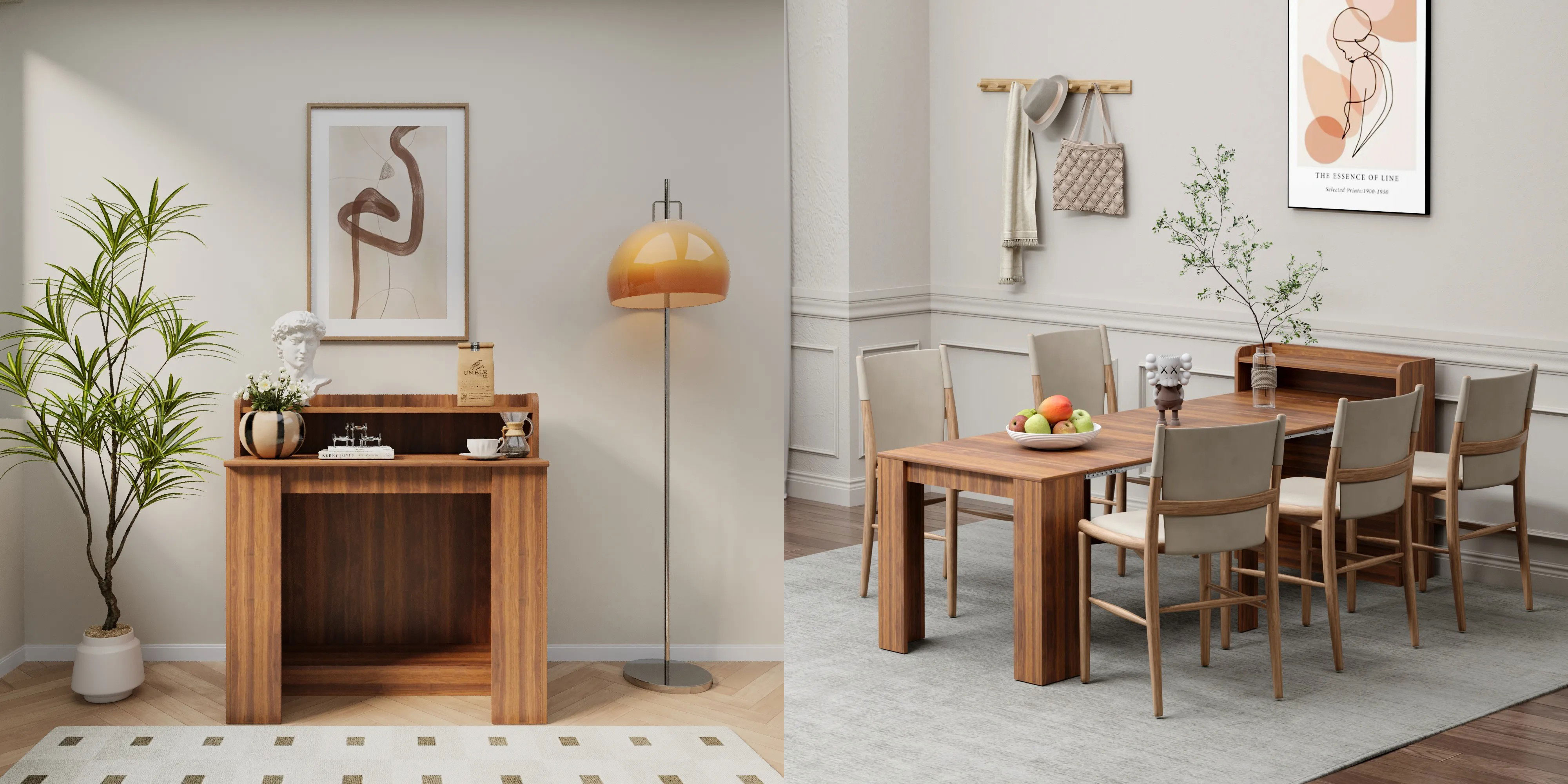
Joysource has launched extendable tables with built-in leaf storage space, meeting your storage needs. Extendable console table starts as slim consoles or desks and expands into full-sized dining tables. Many models use multiple panels that can be added in stages, allowing the table to grow from seating two people to as many as ten. This multifunctionality makes them a favorite in studio apartments and small homes where every piece of furniture must serve multiple purposes.
Butterfly Leaf
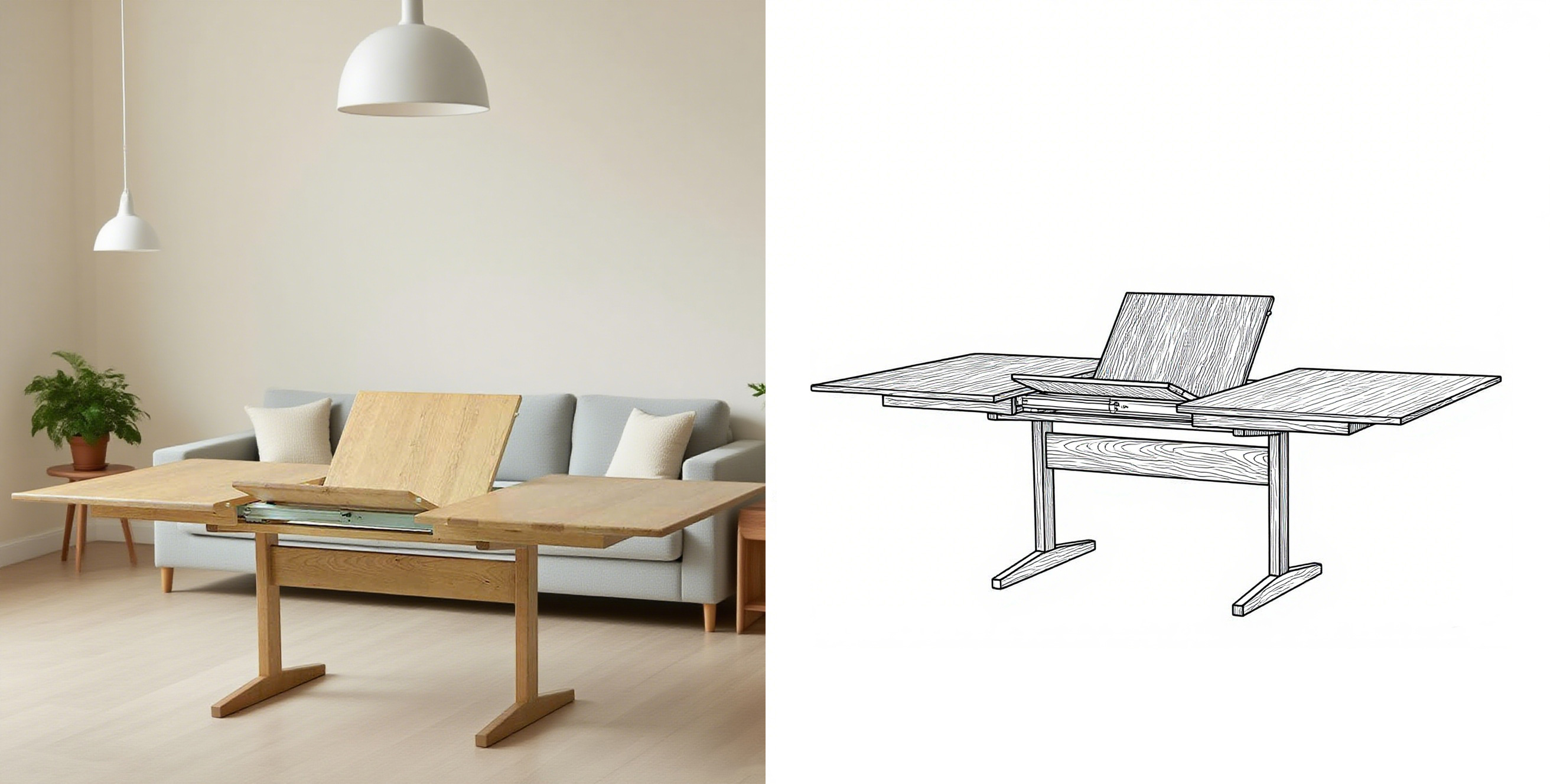
The butterfly leaf is a more modern innovation, designed to eliminate the hassle of external storage. In this system, the leaf is folded in half and stored inside the table itself. When you need more seating, you simply slide open the table, unfold the built-in leaf, and lock it into place. The mechanism is smooth and can usually be managed by one person, making it highly practical for households that expand and contract their dining surface regularly.
The biggest benefit here is convenience: no need to hunt for panels or worry about storage space. A butterfly leaf table is ideal for frequent entertainers or for those who use their table in multiple ways throughout the week. That said, the mechanism involves hinges and moving parts, which can wear out over time if not maintained. Butterfly tables also tend to be heavier than simpler designs, reflecting the complexity of their build.
Slide-Out or End Extensions
.jpg?w=2656&h=1328)
For a clean, streamlined appearance, slide-out extensions are an excellent choice. Instead of splitting down the middle, the extensions pull out from the ends of the table, often sliding neatly into position. This approach maintains a continuous surface and creates a more modern, minimalist aesthetic.
The advantage of slide-out systems is speed: they’re quick and easy to set up, making them perfect for casual meals or when unexpected guests arrive. On the downside, they generally don’t extend as far as central-leaf tables, so they may not work for very large groups. The mechanism, while clever, can also wear out with frequent heavy use. For apartments and small dining areas, however, they provide an elegant compromise between design and functionality.
Drop-Leaf Tables
.jpg?w=2656&h=1328)
The drop-leaf design is a classic solution for tight spaces. In this system, the table has hinged sections on the sides that fold down when not in use. When raised, they create additional surface area for dining. This makes the drop-leaf table one of the most effective examples of a space-saving dining table, perfect for small apartments, kitchen nooks, or multipurpose rooms.
Its strengths lie in compactness and versatility. A drop-leaf table can function as a small console or side table during the day and expand into a dining surface when needed. However, the usable surface when the leaves are down is quite narrow, limiting functionality in its compact form. The hinges may also loosen with years of use, though this is often easily repaired. For smaller households or casual dining, drop-leaf tables remain a reliable and space-efficient choice.
|
Type |
How It Works |
Pros |
Cons |
Best For |
|
Drop-In Leaf |
Table splits in center, separate panel inserted |
Very sturdy; can add multiple leaves for big gatherings |
Requires separate storage; setup can be tricky |
Families with storage space who host large meals |
|
Butterfly Leaf |
Leaf folds in half and stores inside table |
Built-in storage; quick and easy to use |
More moving parts; table heavier |
Frequent entertainers; everyday flexibility |
|
Slide-Out Leaf |
Extensions slide out from table ends |
Fast setup; sleek modern look |
Limited extension; mechanism may wear |
Small spaces; extendable console table designs |
|
Drop-Leaf Table |
Hinged sides fold down when not in use |
Extremely compact; great space saving dining table |
Narrow usable surface when folded; hinges can loosen |
Apartments, breakfast nooks, casual dining |
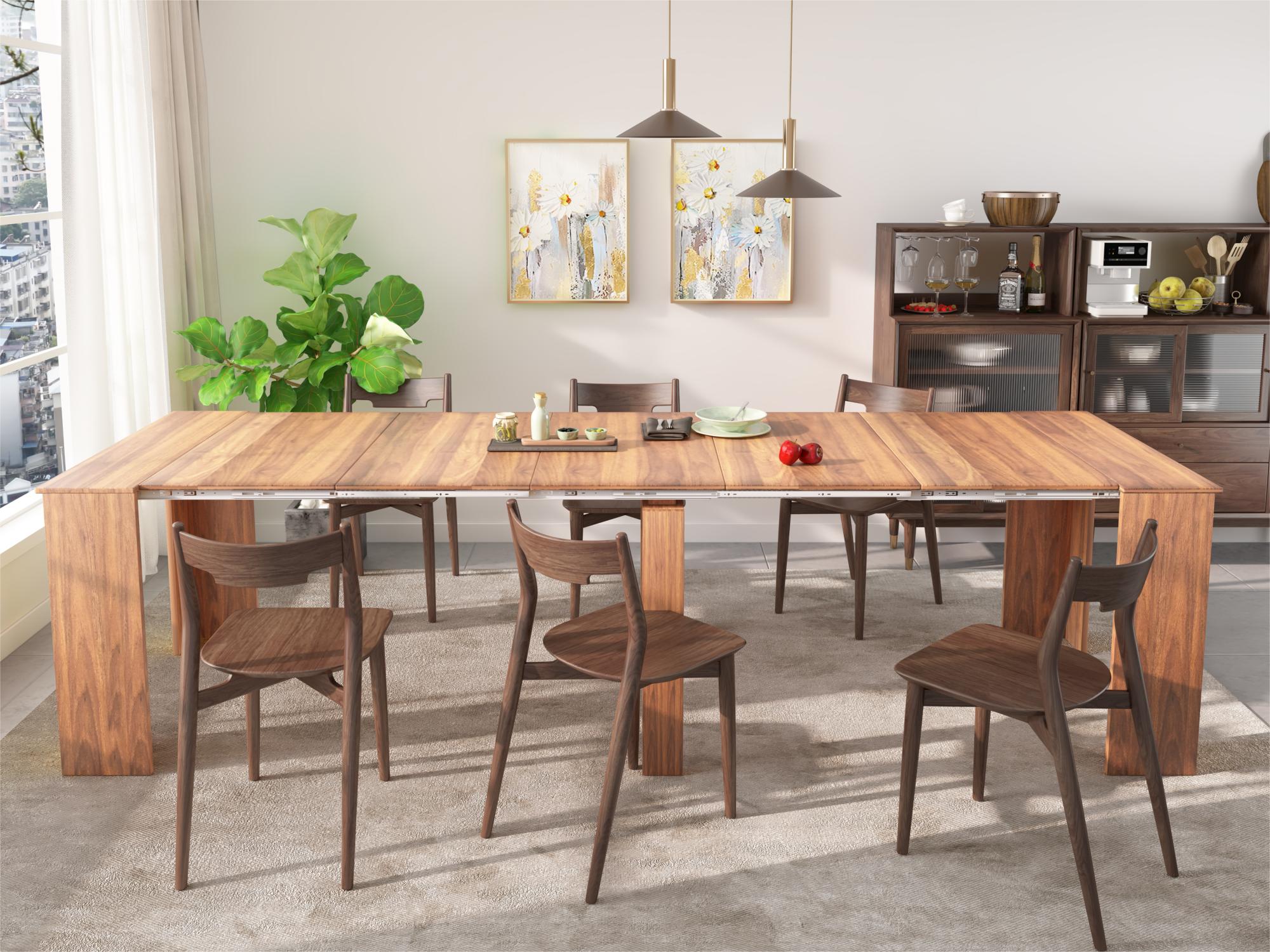
The right extendable table can completely transform how you experience your dining space. Each leaf system—drop-in, butterfly, slide-out, or drop-leaf—offers distinct advantages, from the sturdiness of traditional designs to the ingenuity of modern multifunctional solutions. The key is to balance your specific needs: how much space you have, how often you entertain, and what style best suits your home.
For everyday convenience, a butterfly leaf may be best. For multipurpose small spaces, the extendable console table shines. Whatever your choice, investing in an extendable dining room table ensures you have a space-saving dining table that grows with your lifestyle. With thoughtful designs from brands like Joysource, extendable tables are no longer just functional—they’re central to creating homes that are as adaptable as the people who live in them.